
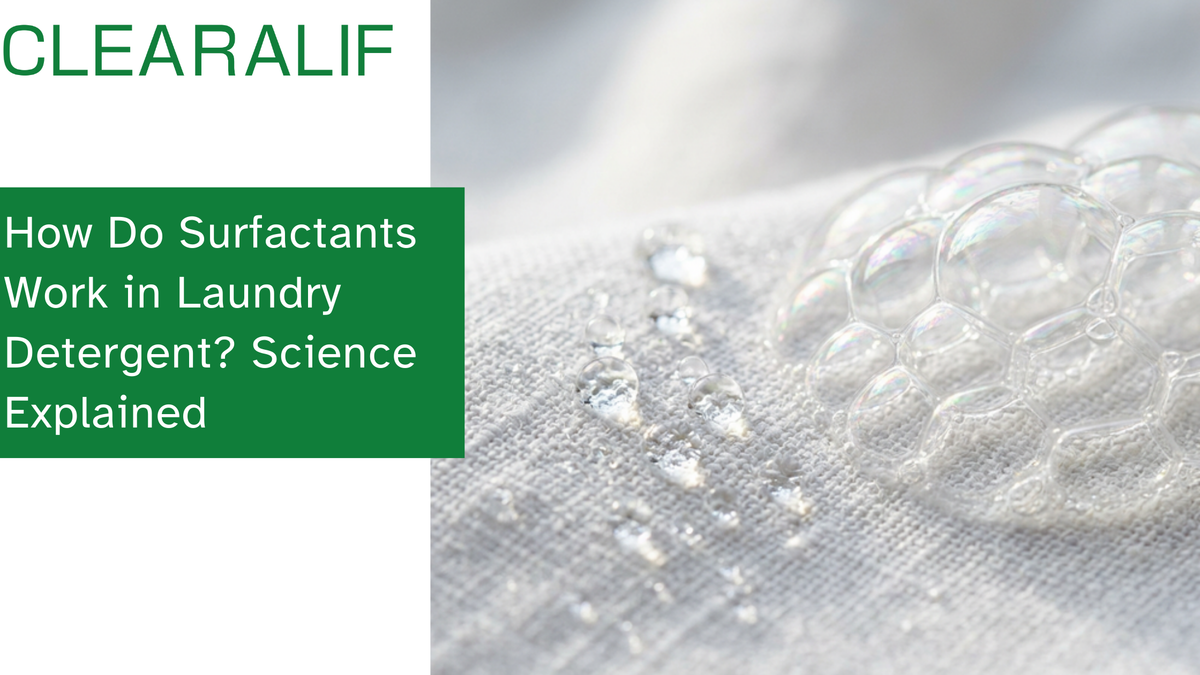
Ever wondered why modern laundry detergents clean so much better than the soap bars your grandmother used? The secret lies in tiny molecular workhorses called surfactants. Understanding how surfactants work in laundry detergent can help you make smarter choices about your cleaning products and get better results from every wash.
These remarkable molecules are the reason your detergent can tackle everything from grass stains to greasy food spills with impressive efficiency.
What Are Surfactants and Why They Matter in Laundry
The Basic Definition: Surface-Acting Agents
The word "surfactant" comes from "surface-active agent," which perfectly describes what these molecules do. They work by reducing surface tension between different substances—primarily between water and the oily, greasy soils that cling to your clothes.
Think of surface tension as an invisible barrier that prevents water from mixing with oils. Surfactants break down this barrier, allowing water to do its cleaning job effectively.
How Surfactants Differ from Traditional Soaps
While both surfactants and soaps are cleaning agents, they work quite differently at the molecular level. Traditional soaps are made from natural fats and oils combined with an alkali, creating molecules that can struggle in hard water or cold temperatures.
Modern surfactants are specifically engineered to perform consistently across various water conditions. They maintain their cleaning power in hard water, work effectively in cold temperatures, and create fewer suds—making them perfect for today's high-efficiency washing machines.
The Role of Surfactants in Modern Laundry Detergents
Laundry detergent chemistry explained shows us that surfactants became the backbone of commercial detergents because they solve problems that traditional soaps couldn't handle. They work in hard water without forming scum, remain effective in cold water, and can be formulated to target specific types of stains.
This versatility is why virtually every modern detergent—from liquid concentrates to innovative detergent sheets—relies on carefully selected surfactant blends.
The Science Behind How Surfactants Clean Your Clothes
Understanding Surface Tension and Water's Limitations
Water alone is surprisingly poor at cleaning because it can't penetrate oily soils or spread effectively across fabric fibers. The science behind laundry detergent cleaning starts with understanding that oil and water naturally repel each other due to their different molecular structures.
Surface tension keeps water molecules tightly bound together, preventing them from wetting fabrics thoroughly or mixing with greasy stains.

The Molecular Structure That Makes Surfactants Work
Every surfactant molecule has two distinct parts: a hydrophilic (water-loving) head and a hydrophobic (water-hating) tail. This dual personality allows surfactants to act as molecular bridges between water and oil-based soils.
The hydrophilic head attracts water, while the hydrophobic tail is drawn to oils and greases. This unique structure enables surfactants to connect substances that would otherwise never mix.
How Surfactants Bridge the Gap Between Water and Soil
When you add detergent to your wash water, surfactant molecules arrange themselves at the interface between water and soil. The water-loving heads point toward the water, while the oil-loving tails penetrate into greasy stains.
This arrangement allows water to effectively surround and lift away soils that it could never touch on its own.
Types of Surfactants Used in Laundry Detergents
Anionic Surfactants: The Workhorses of Cleaning
Anionic surfactants carry a negative electrical charge and provide most of the heavy-duty cleaning power in detergents. Linear alkylbenzene sulfonates (LAS) and alcohol ethoxy sulfates (AES) are common examples that excel at removing oily soils and protein-based stains.
These surfactants create the cleaning backbone of most laundry formulations because of their excellent soil removal capabilities.
Nonionic Surfactants: Gentle Yet Effective
Nonionic surfactants carry no electrical charge, making them gentler on fabrics while still providing solid cleaning performance. Alcohol ethoxylates are particularly effective at removing oily soils and work well in cold water.
These surfactants are often used in formulations designed for delicate fabrics or sensitive skin.
Specialty Surfactants: Cationic and Amphoteric
Cationic surfactants carry a positive charge and are primarily used for their fabric-softening properties rather than cleaning power. Amphoteric surfactants can switch between positive and negative charges depending on water pH, making them useful for specialized applications.
These specialty types typically play supporting roles in detergent formulations.
The Step-by-Step Process: How Surfactants Remove Stains
Wetting: Breaking Down Water's Surface Tension
The first job of surfactants is to help water wet fabric fibers more completely. By reducing surface tension, surfactants remove stains how it works begins with allowing wash water to penetrate deep into fabric weaves where soils hide.
This improved wetting action means water can reach stains that would otherwise remain untouched.
Emulsification: Surrounding and Lifting Soils
Once surfactants have improved water penetration, they begin forming microscopic structures called micelles around soil particles. These micelles completely surround dirt and oil molecules, breaking their bond with fabric fibers.
The hydrophobic tails of surfactant molecules point inward toward the soil, while the hydrophilic heads face outward toward the water, creating a protective bubble around each soil particle.
Suspension and Removal: Keeping Dirt from Redepositing
After lifting soils from fabrics, surfactants keep them suspended in the wash water to prevent redeposition. This suspension action ensures that dirt flows away with the rinse water instead of settling back onto clean clothes.
This final step is crucial for achieving truly clean results.
Factors That Affect Surfactant Performance in Your Wash
Water Temperature and Its Impact on Cleaning Power
Higher water temperatures generally increase surfactant activity and cleaning efficiency. However, modern surfactant formulations are designed to work effectively in cold water, helping you save energy while still achieving good cleaning results.
Cold-water effectiveness has become a priority as consumers seek more environmentally friendly washing practices.
Water Hardness and Mineral Interference
Hard water contains calcium and magnesium ions that can interfere with surfactant performance. Modern detergent formulations include ingredients called builders that bind these minerals, allowing surfactants to work at full efficiency.
Understanding your local water hardness can help you choose the right detergent concentration for optimal results.
Concentration Levels: Finding the Right Balance
Using the correct amount of detergent ensures optimal surfactant concentration in your wash water. Too little detergent means insufficient surfactants for effective cleaning, while too much can leave residues on fabrics.
Following package directions provides the right balance for most washing conditions.
Common Surfactants in CLEARALIF Products
Our Surfactant Selection Philosophy
What are surfactants in cleaning products from CLEARALIF focuses on effectiveness combined with gentleness. We select surfactants that provide excellent cleaning power while being safe for both your family and the environment.
Our formulations prioritize biodegradable surfactants that break down safely after use.

Reading Labels: Identifying Surfactants in Your Detergent
Common surfactant names on ingredient labels include sodium lauryl sulfate, linear alkylbenzene sulfonate, and alcohol ethoxylates. Learning to recognize these ingredients helps you understand what's in your detergent.
CLEARALIF Laundry Detergent Sheets contain carefully selected surfactant blends designed to dissolve completely in cold water while providing powerful cleaning action.
Safety and Environmental Considerations
Modern surfactants used in quality detergents are formulated to be biodegradable and safe for normal use. They break down naturally in the environment and are designed to be gentle on skin while maintaining cleaning effectiveness.
Choosing products with responsible surfactant selections supports both cleaning performance and environmental stewardship.
Maximizing Surfactant Effectiveness in Your Laundry Routine
Best Practices for Optimal Cleaning Results
To get the most from your detergent's surfactants, use the recommended amount for your load size and soil level. Pre-treating heavily soiled items allows surfactants more time to work on tough stains.
Proper water temperature selection based on fabric type and soil level also helps optimize surfactant performance.

Troubleshooting Common Cleaning Issues
If you're experiencing poor cleaning results, check your water hardness and adjust detergent amounts accordingly. Residue buildup might indicate you're using too much detergent or need to clean your washing machine.
Persistent staining issues often resolve when you allow surfactants more contact time through pre-treatment or longer wash cycles.
When to Use Different Detergent Types Based on Surfactant Formulations
Heavy-duty detergents with higher anionic surfactant concentrations work best for tough stains and heavily soiled loads. Gentle formulations with more nonionic surfactants are ideal for delicate fabrics and sensitive skin.
Understanding these differences helps you choose the right product for each laundry challenge.






Dejar un comentario
Este sitio está protegido por hCaptcha y se aplican la Política de privacidad de hCaptcha y los Términos del servicio.