
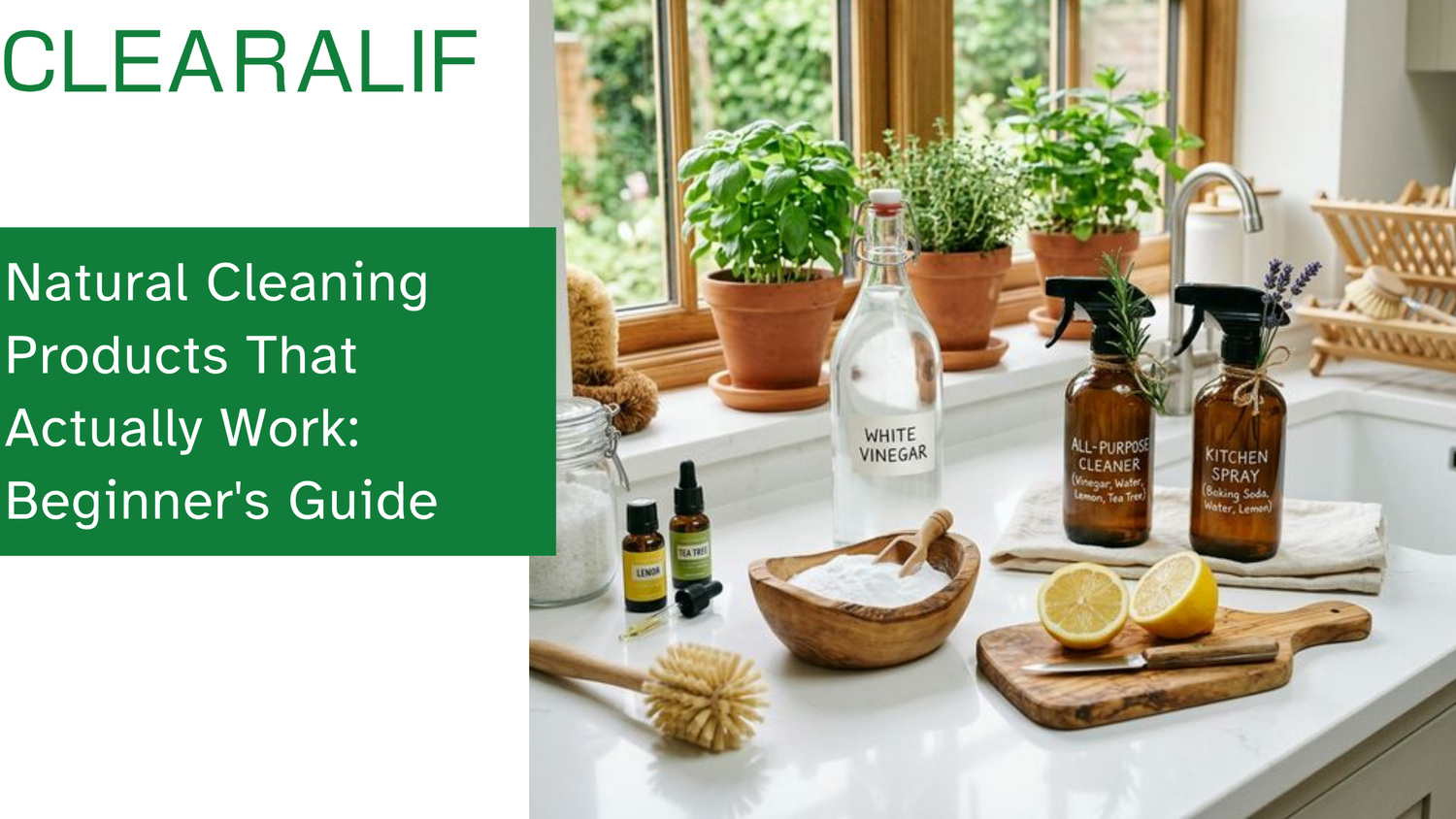
Making the switch to natural cleaning products that actually work doesn't mean compromising on cleanliness. Whether you're concerned about harsh chemicals in your home or simply want to explore more sustainable cleaning methods, this beginner's guide will show you exactly how to clean effectively using natural ingredients and proven techniques.
The key to success with natural cleaners isn't just swapping products—it's understanding which ingredients work best for specific tasks and how to use them properly.
Why Natural Cleaning Products Are Worth the Switch
The Hidden Costs of Chemical Cleaners
Traditional cleaning products often contain volatile organic compounds (VOCs) that can contribute to indoor air pollution and respiratory irritation. Many conventional cleaners also leave behind residues that can accumulate on surfaces over time, especially concerning in kitchens where food is prepared.
Beyond health considerations, chemical cleaners contribute to environmental pollution through manufacturing processes and packaging waste. The plastic bottles and harsh ingredients eventually make their way into water systems, affecting ecosystems long after they've left your home.
Common Myths About Natural Cleaners That Hold People Back
The biggest misconception about natural cleaning products is that they're automatically less effective than chemical alternatives. In reality, many natural ingredients have been used for cleaning for centuries because they genuinely work. Vinegar, for example, is naturally acidic and excellent at breaking down mineral deposits and soap scum.
Another myth is that natural cleaning is more expensive. While some commercial natural products cost more upfront, many effective natural cleaners can be made from common household ingredients at a fraction of the cost of specialized chemical products.
What Makes a Natural Cleaner Actually Effective
Effective natural cleaners work through basic chemistry principles. Acids (like vinegar and lemon) excel at dissolving mineral buildup and cutting through soap scum. Alkaline substances (like baking soda) neutralize acids and provide gentle abrasive action. Understanding these properties helps you choose the right natural cleaner for each job.
The key is matching the cleaner to the task and giving natural products adequate contact time to work—something many beginners overlook.
The Natural Cleaning Powerhouse Ingredients That Really Work
White Vinegar: Your Multi-Purpose Cleaning Champion
White vinegar contains acetic acid, making it naturally antimicrobial and excellent for dissolving mineral deposits. For general cleaning, mix equal parts water and white vinegar in a spray bottle. This solution works wonderfully on glass surfaces, leaving them streak-free, and effectively cleans microwaves when heated for 30 seconds.
However, avoid using vinegar on natural stone surfaces like marble or granite, as the acid can cause etching. Also skip vinegar on rubber seals in appliances, as it can cause deterioration over time.
For deodorizing, place a bowl of undiluted vinegar in rooms with persistent odors overnight. The vinegar smell dissipates quickly, taking other odors with it.

Baking Soda: The Gentle Scrubbing and Deodorizing Hero
Baking soda's mild alkalinity makes it perfect for neutralizing acids (like those that cause odors) while providing gentle abrasive action that won't scratch surfaces. Create a paste with water for scrubbing sinks, tubs, and stovetops.
For carpet and mattress deodorizing, sprinkle baking soda liberally over the surface, let sit for at least 15 minutes (longer for tough odors), then vacuum thoroughly. This technique works because baking soda absorbs odor-causing particles rather than just masking them.
Lemon and Citrus: Natural Grease Cutters and Fresheners
The citric acid in lemons makes them excellent for cutting through grease and removing stains. Rub half a lemon directly on cutting boards to clean and deodorize, or drop lemon peels down the garbage disposal with ice cubes for natural freshening and blade sharpening.
For metal polishing, combine lemon juice with salt to create a paste that removes tarnish from copper and brass. Always test on an inconspicuous area first, and avoid using citrus on acid-sensitive surfaces like marble.
Room-by-Room Natural Cleaning Strategies
Kitchen: Tackling Grease, Food Stains, and Odors Naturally
For stovetop cleaning, make a paste of baking soda and water, apply to cooled surfaces, and let sit for 10 minutes before scrubbing with a soft cloth. For oven cleaning, create a paste of baking soda, water, and a few drops of dish soap. Apply, let sit overnight, then scrub and rinse.
Clean your refrigerator with a solution of 2 tablespoons baking soda in 1 quart warm water. This mixture cleans without leaving strong scents that could affect food flavors. For sink maintenance, pour 1/2 cup baking soda down the drain followed by 1 cup vinegar, let foam for 15 minutes, then flush with hot water.
Bathroom: Natural Solutions for Soap Scum, Mildew, and Hard Water
Combat soap scum with a 1:1 ratio of dish soap and white vinegar, heated slightly for better effectiveness. Apply, let sit for 30 minutes, then scrub and rinse. For toilets, pour 1 cup white vinegar into the bowl, let sit for several hours or overnight, then scrub and flush.
For shower doors with hard water spots, use undiluted white vinegar applied with a cloth, followed by a squeegee to prevent new water spots from forming.
Living Areas: Carpets, Upholstery, and General Surface Cleaning
For wood furniture, mix 1/4 cup white vinegar with 3/4 cup olive oil for a natural polish that cleans and conditions. Always test on a hidden area first. For carpet spot cleaning, blot (don't rub) fresh spills, then apply a mixture of 1 tablespoon white vinegar and 1 tablespoon liquid dish soap in 2 cups warm water.
Dust naturally by using slightly damp microfiber cloths, which trap dust particles instead of spreading them around like dry dusters can.
Natural Laundry Solutions That Actually Get Clothes Clean

Pre-treating Stains the Natural Way
For grass stains, make a paste of baking soda and water, rub gently into the stain, and let sit for 30 minutes before washing. Blood stains respond well to cold water and hydrogen peroxide—pour a small amount directly on the stain, let bubble for a few minutes, then rinse with cold water.
Food stains often surrender to a mixture of equal parts white vinegar and water applied directly to the stain and allowed to sit for 10-15 minutes before washing.
DIY Natural Laundry Detergent Recipes That Work
A simple and effective recipe combines 1 cup washing soda, 1 cup borax, and 1/2 cup grated castile soap. Use 1-2 tablespoons per load. For those seeking convenience without compromising natural ingredients, CLEARALIF Laundry Detergent Sheets offer a plastic-free alternative that dissolves completely in cold water and works effectively in HE machines.
Always store homemade detergents in airtight containers and label them clearly with ingredients and date made.
Natural Fabric Softeners and Odor Eliminators
Replace liquid fabric softener with 1/2 cup white vinegar added to the rinse cycle. The vinegar smell disappears as clothes dry, leaving fabrics soft without residue buildup. Wool dryer balls provide natural fabric softening and reduce drying time by improving air circulation.
For persistent odors in workout clothes, soak in a solution of 1 cup white vinegar to 1 gallon water for 30 minutes before washing normally.
Homemade Cleaning Solution Recipes and Ratios
All-Purpose Cleaners You Can Make at Home
Basic All-Purpose Cleaner: Mix 1/2 cup white vinegar, 1/4 cup rubbing alcohol, 1-3 drops liquid dish soap, and 1 1/3 cups water. This solution works on most surfaces and has a shelf life of about 3 months when stored in a cool, dark place.
Heavy-Duty All-Purpose Cleaner: Combine 1/2 cup white vinegar, 1/4 cup baking soda, and 1/2 gallon warm water. Use immediately as this mixture doesn't store well due to the reaction between vinegar and baking soda.

Specialized Natural Cleaners for Tough Jobs
For toilet bowl cleaning, mix 1/2 cup baking soda with 1/4 cup white vinegar and 10 drops tea tree oil. The combination provides cleaning power and natural antimicrobial properties.
Heavy-duty degreasing requires 1/4 cup washing soda dissolved in 1 quart hot water. This alkaline solution cuts through grease effectively but should be used with gloves as washing soda can be irritating to skin.
Storage Tips and Safety Guidelines for Homemade Cleaners
Always use glass or high-quality plastic containers for storing homemade cleaners, as some ingredients can react with certain plastics over time. Label everything clearly with contents and date made—this isn't just good organization, it's essential safety practice.
Never mix vinegar with hydrogen peroxide, as this creates an unstable acid. Similarly, avoid combining vinegar and baking soda for storage, as they neutralize each other's effectiveness.
Common Natural Cleaning Mistakes and How to Avoid Them
Ingredient Combinations That Don't Work (Or Are Dangerous)
The biggest mistake beginners make is assuming all natural ingredients can be safely combined. Mixing bleach with vinegar creates dangerous chlorine gas, while combining hydrogen peroxide with vinegar forms peracetic acid, which can be corrosive.
Using too much of any ingredient can also backfire. More isn't always better—excessive vinegar can damage surfaces, while too much baking soda can leave a gritty residue.
Why Your Natural Cleaners Might Not Be Working
Often, natural cleaning failures come from unrealistic expectations or improper technique. Natural cleaners typically need more contact time than chemical alternatives—let them sit and work before scrubbing or wiping away.
Using expired ingredients also reduces effectiveness. Baking soda loses potency over time, and vinegar can become less acidic if not stored properly.
When to Use Store-Bought Natural Products vs. DIY
While DIY solutions work wonderfully for many tasks, some situations call for commercial natural products. Best natural cleaning methods for home often involve combining both approaches strategically.
For laundry, particularly, commercial natural products like CLEARALIF's fragrance-free detergent sheets provide consistent results and convenience while maintaining natural ingredients and plastic-free packaging. The low-sudsing formula works especially well in HE machines where homemade detergents might create too many bubbles.
Heavy-duty cleaning tasks or homes with specific health concerns might also benefit from commercial natural products that have been tested for effectiveness and safety.
---
Natural cleaning products that actually work are within every beginner's reach. Start with one or two basic recipes, master those techniques, then gradually expand your natural cleaning toolkit. Remember, the goal isn't perfection—it's creating a cleaner, healthier home environment using methods that work for your lifestyle and values.
With patience and the right techniques, you'll discover that effective homemade cleaning solutions can handle most household cleaning tasks while supporting both your family's health and environmental sustainability.






Dejar un comentario
Este sitio está protegido por hCaptcha y se aplican la Política de privacidad de hCaptcha y los Términos del servicio.