
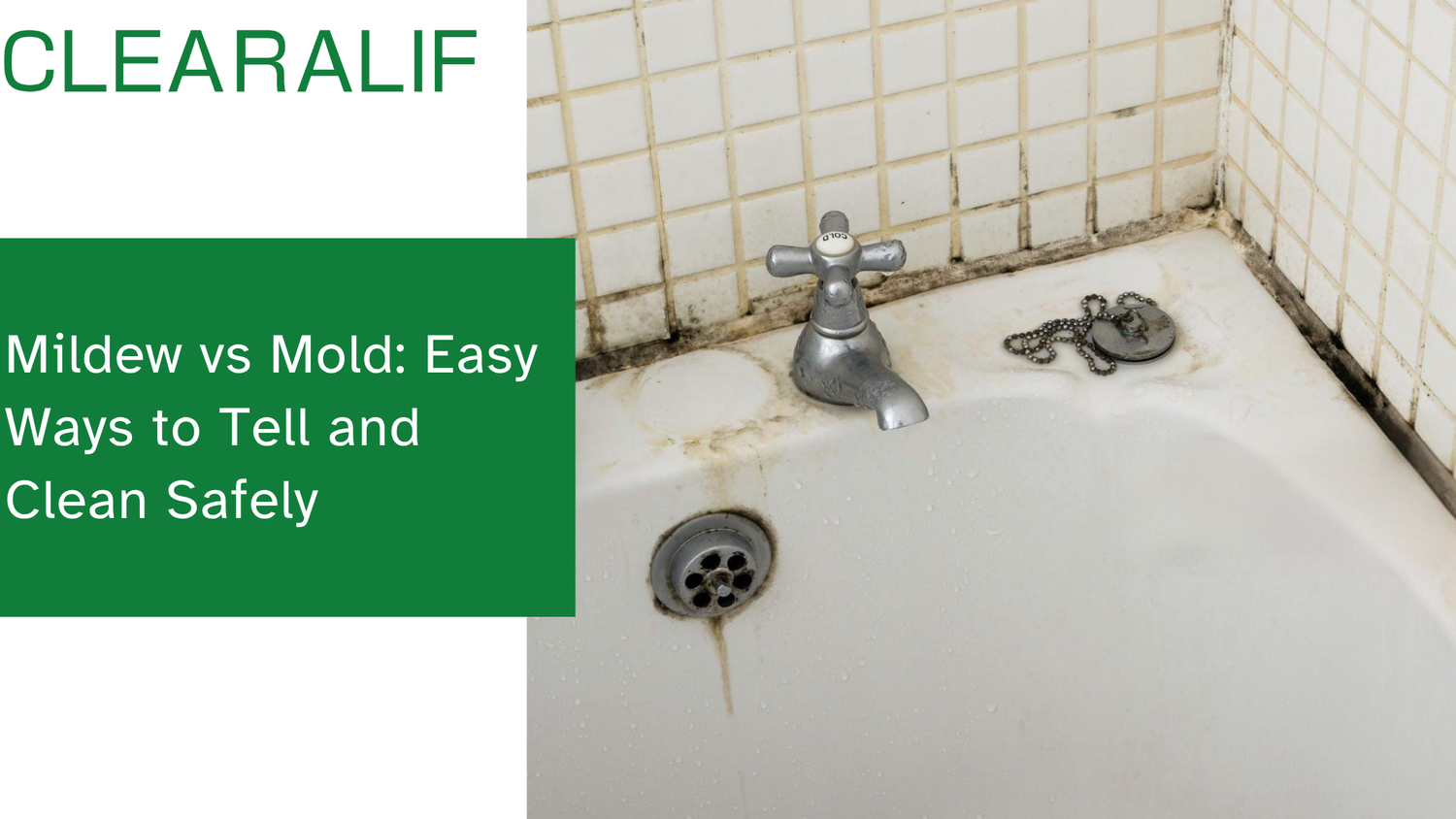
You notice dark spots spreading along your bathroom ceiling. There’s a musty smell lingering in the laundry room no matter how many times you wipe things down. And that corner of the shower? It’s got a film of something gray-green that keeps coming back.
Is it mildew? Is it mold? And does it actually matter?
Yes — it does. Knowing the difference between mildew and mold helps you clean it the right way, protect your family’s health, and stop it from coming back. Mildew is usually a surface nuisance you can tackle with a little elbow grease. Mold, on the other hand, can dig deeper into walls, fabrics, and grout — and sometimes needs more serious attention. Let’s break down what you’re dealing with and how to handle it safely, naturally, and without a panic spiral.

Mildew vs. Mold: What’s the Difference?
At first glance, mildew and mold can look pretty similar — both show up as discolored patches in damp places. But they’re not the same thing, and treating them the wrong way can make the problem worse (or just waste your time).
Here’s a quick comparison to help you figure out what’s growing in your home:
| Feature | Mildew | Mold |
|---|---|---|
| Appearance | Flat, powdery, or downy; usually white, gray, or light yellow | Fuzzy, slimy, or raised; often black, green, red, or dark brown |
| Texture | Stays on the surface; wipes off fairly easily | Penetrates deeper into surfaces; harder to remove completely |
| Smell | Musty, damp — think wet towel left in a gym bag | Stronger, earthy, sometimes pungent |
| Common Locations | Shower walls, windowsills, fabrics, paper | Behind walls, under sinks, in grout, wood, drywall |
| Health Risk | Low to moderate; can cause minor respiratory irritation | Moderate to high; some types release toxins and allergens |
Quick test: If you spray it with cleaner and it wipes away without much resistance, you’re probably dealing with mildew. If it leaves a stain or seems to have roots, that’s mold.

Mildew is essentially mold’s less aggressive cousin. It lives on the surface of things like shower curtains, bathroom tiles, or damp fabrics. Mold, however, is more stubborn. It grows into porous materials like wood, drywall, and grout. Left unchecked, it can weaken structures and trigger allergies, asthma, or other respiratory issues — especially in kids, elderly family members, or anyone with a compromised immune system.
The good news? Both can be cleaned and prevented with the right approach. You just need to know which one you’re up against.

Why Mildew and Mold Show Up in Your Home
Mildew and mold aren’t picky houseguests — they just need three things to thrive: moisture, warmth, and something organic to feed on (like soap scum, dirt, or fabric fibers). If your home has any combo of these, you’re basically rolling out the welcome mat.
Moisture Is the Main Culprit
Bathrooms, laundry rooms, basements, and kitchens are prime real estate for mildew and mold because they’re naturally humid. Every shower you take, every load of laundry you wash, every pot of pasta you boil — it all adds moisture to the air. If that moisture doesn’t have a way to escape, it settles on surfaces and creates the damp environment mildew and mold love.
Poor Ventilation Doesn’t Help
If your bathroom doesn’t have a fan, or if you never open windows to let fresh air circulate, moisture has nowhere to go. It just hangs around, seeping into grout lines, under bath mats, and along windowsills. The same goes for laundry rooms with dryers that vent indoors or basements that stay closed up year-round.
Detergent and Soap Residue Act Like Food
This one surprises people. That filmy buildup from laundry detergent, body wash, or shampoo? It’s not just annoying — it’s actually feeding mildew and mold. The residue traps moisture and gives these fungi something to snack on while they multiply. It’s one reason why washing machines, shower walls, and bathtub corners are such common trouble spots.
Lack of Sunlight and Airflow
Mildew and mold hate sunlight and moving air. That’s why they tend to pop up in dark, stuffy corners — like behind the toilet, under the sink, or in a closet that never gets opened. If a space doesn’t see daylight or get regular airflow, it’s basically a spa retreat for fungal growth.
Safe and Natural Removal Methods
Alright, you’ve identified the problem. Now let’s get rid of it — safely, naturally, and without turning your home into a chemical zone.

For Mildew: Simple Surface Cleaning
Mildew is the easier of the two to tackle because it lives on the surface. Here’s how to clean it:
What You’ll Need:
- White vinegar
- Baking soda
- Spray bottle
- Microfiber cloth or soft brush
- Gloves (optional, but helpful)
Steps:
- Spray it down. Fill a spray bottle with undiluted white vinegar and spray the mildew-covered area generously. Let it sit for 10–15 minutes. Vinegar is naturally acidic and kills about 82% of mold and mildew species.
- Scrub gently. Use a microfiber cloth or soft brush to wipe away the mildew. For stubborn spots, sprinkle a little baking soda on the area and scrub in circular motions. The slight abrasiveness helps lift residue without scratching surfaces.
- Rinse and dry. Wipe down the area with a damp cloth, then dry it completely with a towel or let it air dry with good ventilation. Mildew can’t grow on dry surfaces.
This method works beautifully on shower tiles, bathroom sinks, windowsills, and even fabric shower curtains (just toss the curtain in the wash with a cup of vinegar afterward).

For Mold: Deeper Cleaning and Caution
Mold requires a bit more care because it can penetrate surfaces and release spores into the air when disturbed. If you’re dealing with a small patch (smaller than 10 square feet), you can usually handle it yourself. Anything larger, or mold growing inside walls or HVAC systems, is best left to professionals.
What You’ll Need:
- White vinegar or hydrogen peroxide (3%)
- Spray bottle
- Stiff brush
- Protective gloves and mask (to avoid breathing in spores)
- Towels
Steps:
- Protect yourself. Put on gloves and a mask. Open windows or turn on fans to ventilate the space.
- Apply your cleaner. Spray white vinegar or hydrogen peroxide directly onto the moldy area. Don’t dilute it — you want full strength. Let it sit for at least an hour to kill the mold at its roots.
- Scrub thoroughly. Use a stiff brush to scrub the mold away. You might need to reapply cleaner and scrub multiple times, especially if the mold has stained porous surfaces like grout or wood.
- Wipe and dry completely. Use a damp towel to remove any remaining residue, then dry the area thoroughly. Consider running a dehumidifier or fan to speed up drying.
Important: Never mix vinegar with bleach or hydrogen peroxide with bleach. These combinations create toxic fumes. Stick to one natural cleaner at a time.

Prevention: Stop It Before It Starts
Once you’ve cleaned up mildew or mold, the goal is to keep it from coming back. Here’s how:
- Improve ventilation. Run bathroom fans during and after showers. Open windows when you can. Use a dehumidifier in damp spaces like basements or laundry rooms.
- Dry surfaces regularly. Wipe down shower walls after use. Hang wet towels and bath mats to dry instead of leaving them in a heap.
-
Let in light and air. Open curtains, crack windows, and don’t let closets or corners stay dark and stuffy for weeks on end.

- Clean your washing machine. Detergent buildup inside your washer creates the perfect breeding ground for mildew. Run a monthly cleaning cycle with a washing machine cleaner tablet or a cup of vinegar to keep things fresh. If you’re using traditional liquid detergent, consider switching to something that rinses cleaner — like CLEARALIF’s laundry detergent sheets. They dissolve completely and don’t leave behind the gummy residue that feeds mildew.
- Fix leaks fast. A dripping faucet or leaky pipe might seem minor, but it’s a mold magnet. Get it fixed before moisture has a chance to settle in.

A Clean Home Is a Healthier Home
Dealing with mildew or mold isn’t fun, but it’s also not something to lose sleep over — especially now that you know what you’re looking at and how to handle it. A clean home isn’t about perfection or bleaching every surface until it sparkles. It’s about creating a space where your family can breathe easier, feel comfortable, and not worry about what’s growing in the corners.
Start with small steps: better ventilation, regular cleaning, and natural solutions that work without harsh chemicals. Your lungs, your walls, and your peace of mind will all thank you. And if you’re looking for eco-friendly ways to keep your laundry room and bathroom fresh, explore the plastic-free cleaning essentials at clearalif.com — because a healthier home starts with smarter choices.





1 comment
Mold Remediation Spokane WA
Great breakdown—understanding the differences between mildew and mold is essential, especially when planning proper cleaning or full mold remediation. Mildew is usually surface-level and easier to wipe away, while mold can penetrate deeper and may require stronger treatment or professional help. Keeping moisture under control is the best way to prevent both from returning.
Leave a comment
This site is protected by hCaptcha and the hCaptcha Privacy Policy and Terms of Service apply.