
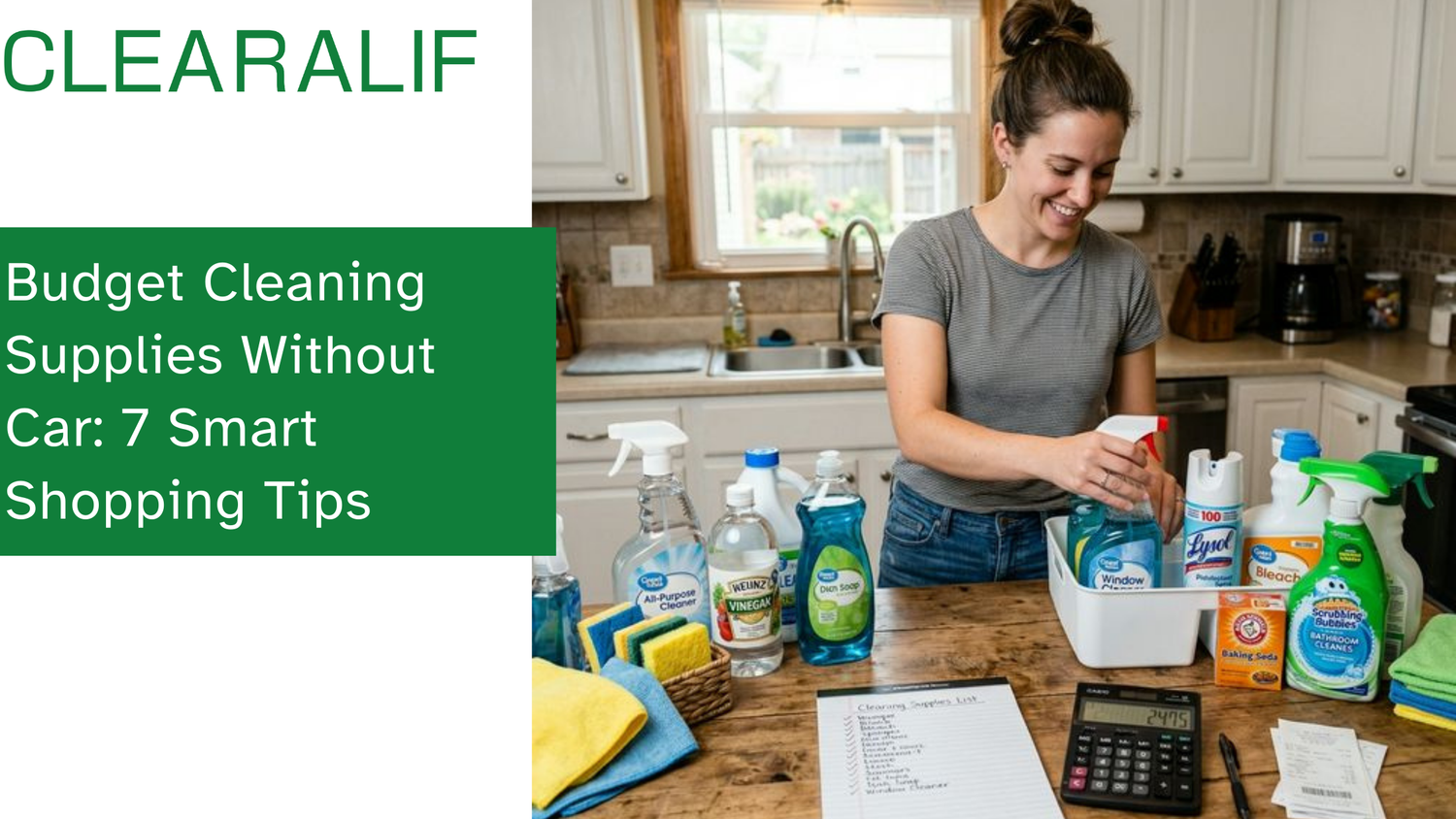
Shopping for budget cleaning supplies without car access can feel like an uphill battle. Between delivery fees, minimum order requirements, and the frustration of missing items, keeping your home clean while staying within budget becomes a strategic challenge. The good news? With the right approach and planning, you can maintain a well-stocked cleaning arsenal without breaking the bank or relying on expensive delivery services.
Whether you're dealing with unreliable public transit, living in a walkable neighborhood, or simply trying to stretch your dollars further, these seven smart shopping strategies will help you secure affordable household cleaners and maintain your cleaning routine without the hassle of traditional shopping methods.
Understanding Your Transportation-Free Shopping Challenges
Why Delivery Apps Often Fall Short
Most delivery apps weren't designed with budget-conscious shoppers in mind. You've probably experienced the frustration of placing a carefully planned order only to receive half your items, with the missing products being exactly what you needed most. Delivery services often struggle with heavy cleaning supplies, leading to frequent substitutions or outright cancellations.
The minimum order requirements compound this problem. When you're trying to stick to a tight budget, being forced to spend $35-50 just to qualify for delivery can throw off your entire monthly spending plan. Add in delivery fees, tips, and service charges, and that "convenient" bottle of all-purpose cleaner suddenly costs twice what you'd pay in-store.
The Hidden Costs of Failed Deliveries
When your cleaning supply delivery fails, the costs extend far beyond the redelivery fee. You're left scrambling for alternatives, often paying premium prices at convenience stores or making do with inadequate substitutes. This disrupts your cleaning routine and can lead to larger problems down the road – like having to replace items that weren't properly maintained.
Time is another hidden cost. Reordering, waiting for new delivery windows, and dealing with customer service eats into your schedule. For people managing tight budgets, this unpredictability makes financial planning nearly impossible.

Strategic Bulk Buying and Storage Solutions
Calculating Your True Cleaning Needs
Before diving into bulk purchases, take inventory of your actual usage. Track how long a bottle of laundry detergent lasts your household, or how often you replace all-purpose cleaners. Most people underestimate their needs and end up making frequent emergency purchases at higher prices.
Create a simple tracking system for 2-3 months. Note when you open new products and when they run out. This data becomes your blueprint for strategic bulk buying that actually saves money rather than tying up your budget in excess inventory.
Smart Storage for Small Spaces
Limited storage space doesn't have to limit your bulk buying potential. Focus on concentrated products that deliver more cleaning power per ounce.

CLEARALIF Laundry Detergent Sheets, for example, take up minimal space while providing the same cleaning power as traditional liquid detergents.
Vertical storage solutions work wonders in small spaces. Over-door organizers, stackable bins, and under-sink caddies can multiply your storage capacity. Consider decanting bulk purchases into smaller, uniform containers that stack efficiently and help you monitor usage rates.
Building a Reliable Shopping Network
Coordinating with Friends and Neighbors
One of the most effective strategies for cheap household cleaners for people without transportation involves building a shopping network. Start conversations with neighbors about coordinating trips to warehouse stores or taking advantage of bulk pricing together.
Propose a simple system: rotate who makes the shopping trip, split costs evenly, and establish clear communication about everyone's needs. This approach often reduces individual costs by 30-40% while ensuring everyone gets their preferred products.
Connecting with Community Resources
Many communities offer transportation assistance programs that extend beyond medical appointments. Senior centers, community organizations, and religious institutions often coordinate shopping trips or volunteer driver programs. Even if you're not in their primary demographic, these organizations sometimes welcome additional participants.
Neighborhood apps like Nextdoor can be goldmines for finding shopping partners or people willing to pick up items during their regular store runs. The key is being proactive about building these relationships before you desperately need them.

Alternative Transportation and Delivery Options
Public Transit Shopping Strategies
Public transportation shopping requires different tactics than car-based trips. Invest in a quality wheeled shopping cart – it's a game-changer for transporting heavy cleaning supplies. Plan your routes during off-peak hours when buses and trains are less crowded and drivers are more accommodating of larger bags.
Break large shopping lists into multiple smaller trips rather than trying to carry everything at once. Focus each trip on specific categories: one trip for laundry supplies, another for bathroom cleaners. This approach is easier on your budget and your back.
Local Delivery Services Beyond Major Apps
Don't overlook smaller, local delivery options. Many independent grocery stores offer delivery services with lower fees and more flexible minimum orders than major apps. Local pharmacies increasingly stock cleaning supplies and often provide free delivery for regular customers.
Some areas have emerged with specialized services focusing on household essentials. These services understand the challenges of car-free shopping and structure their offerings accordingly, with reasonable minimums and reliable delivery windows.
Maximizing Online Shopping Success
Choosing the Most Reliable Platforms
Not all online shopping platforms handle cleaning supplies equally well. Research which services in your area have the best track record for household essentials. Read recent reviews specifically mentioning cleaning products, and pay attention to comments about item availability and substitution policies.
Time your orders strategically. Mid-week orders often have better fulfillment rates than weekend orders when demand spikes. Early morning delivery windows typically see fewer issues than evening slots.
Order Optimization Techniques
Structure your orders to minimize disappointment. Place essential items like laundry detergent and all-purpose cleaners early in your cart – many fulfillment systems pick items in the order they were added. Set substitution preferences conservatively; it's better to receive a partial order than pay premium prices for inferior substitutes.
Consider splitting large orders across multiple platforms rather than putting all your eggs in one basket. This strategy provides backup options if one service fails and helps you compare pricing across different providers.

Budget-Friendly Cleaning Supply Alternatives
DIY Cleaning Solutions That Actually Work
Strategic DIY solutions can bridge gaps between shopping trips and reduce overall costs. A simple all-purpose cleaner made from white vinegar, water, and a drop of dish soap costs pennies per use and handles most daily cleaning tasks effectively.
However, don't assume DIY is always cheaper. Calculate the true cost including your time and ingredient purchases. For specialized tasks like laundry, quality commercial products often provide better value and results than homemade alternatives.
Multi-Purpose Products to Reduce Shopping Frequency
Streamline your cleaning arsenal by focusing on versatile products that handle multiple tasks. This strategy reduces the number of shopping trips needed and simplifies your storage requirements. Look for concentrated formulas that you can dilute for different purposes.
Quality matters when choosing multi-purpose products. Investing in reliable brands means fewer failed cleaning attempts and better long-term value. Products that dissolve in cold water and work in HE machines provide additional utility and energy savings.
Emergency Backup Plans and Long-Term Solutions
Creating a Cleaning Supply Emergency Kit
Maintain a small emergency reserve of essential cleaning supplies to avoid crisis shopping at premium prices. This doesn't mean hoarding – just keeping one backup of critical items like laundry detergent, all-purpose cleaner, and dish soap.
Monitor your emergency supplies regularly and replace items before they expire. Rotate stock to ensure you're always using the oldest products first. This system prevents waste while ensuring you're never completely caught off guard.
Building Toward Transportation Independence
Use your current situation as motivation to explore long-term solutions. Research community car-sharing programs, save toward transportation alternatives, or investigate whether your living situation might change in ways that improve shopping access.
Meanwhile, perfect your car-free shopping systems. The skills you develop now – strategic planning, community networking, and efficient resource management – will serve you well regardless of your future transportation situation.
The key to successful budget cleaning supplies shopping without a car lies in planning, community building, and strategic thinking. By implementing these seven approaches systematically, you'll find that maintaining a clean home on a budget becomes not just possible, but surprisingly manageable. Focus on building reliable systems rather than perfect solutions, and remember that small improvements in your shopping strategy can yield significant savings over time.






Dejar un comentario
Este sitio está protegido por hCaptcha y se aplican la Política de privacidad de hCaptcha y los Términos del servicio.