
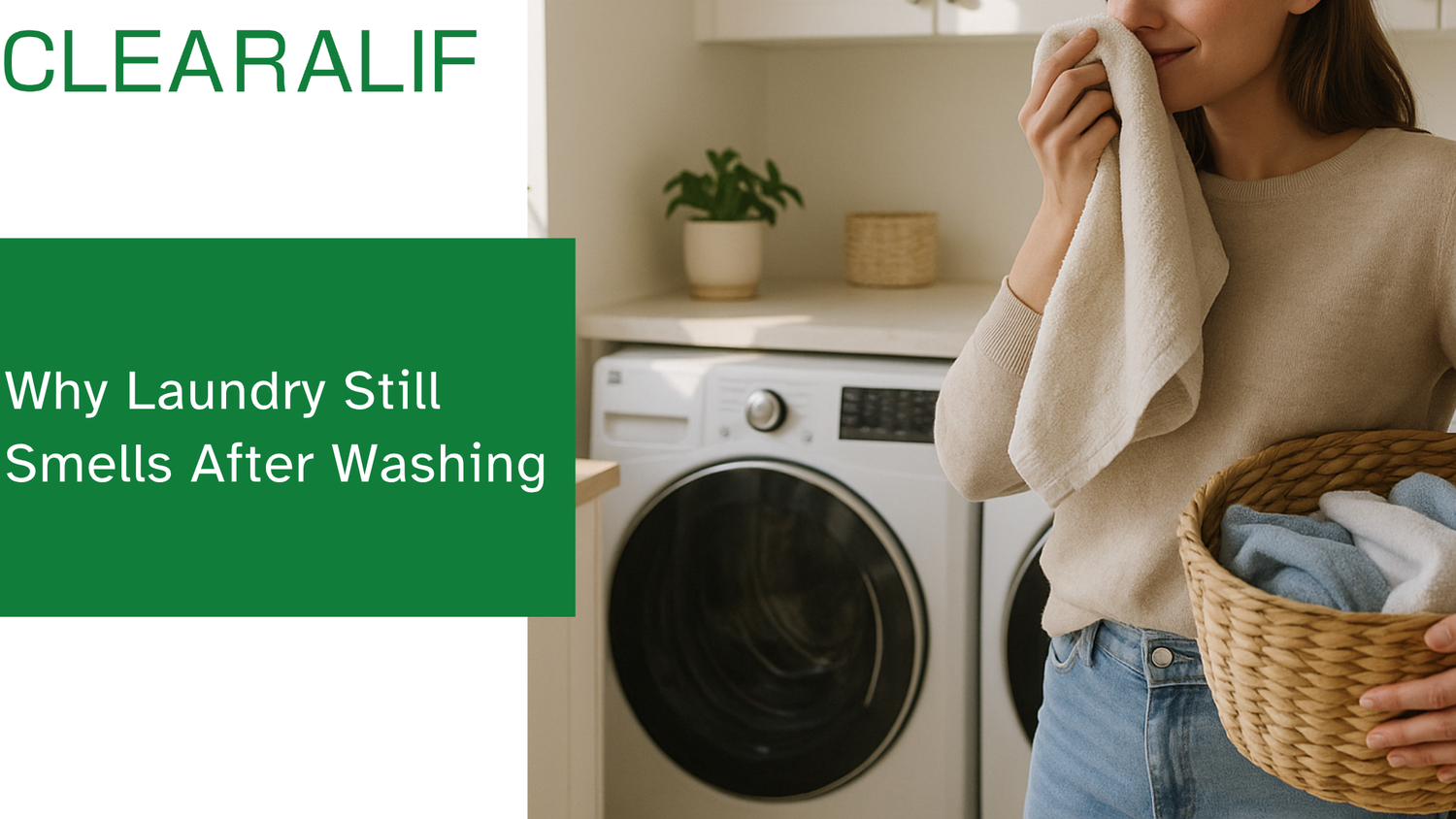
Why Your Laundry Still Smells After Washing — and How to Fix It Naturally
You pull your clothes out of the washer, expecting that fresh-from-the-line feeling — and instead, there's that smell. You know the one. Maybe it's your kid's soccer uniform that still reeks of sweat even after a full cycle. Or your favorite hoodie that smells vaguely like mildew no matter how much detergent you use. It's frustrating, and honestly? It makes you wonder if your washing machine is even doing its job.
Here's the thing: you're not alone, and you're definitely not doing anything wrong. Lingering laundry odors are one of the most common (and maddening) household problems — but the good news is they're fixable. And you don't need harsh chemicals or expensive products to solve it. Let's dig into why your laundry still smells after washing and how to get rid of those stubborn odors naturally.
Common Reasons Your Laundry Still Smells
If your clean laundry doesn't actually smell clean, there's usually a reason hiding behind the scenes. Let's break down the usual suspects.
Bacteria Buildup in Your Washing Machine

Your washing machine might look clean, but it's actually a prime spot for bacteria, mold, and mildew to hang out — especially in front-loaders. Every time you wash clothes, tiny bits of detergent, fabric softener, dirt, and body oils get left behind. They settle into the rubber gasket, detergent drawer, and drum. Over time, that buildup creates a funky smell that transfers right onto your clothes.
Think of it this way: if your washer smells, your clothes will too. Even if you can't see the gunk, it's there — and it's why that "clean" load comes out smelling sour or musty.
You're Using Too Much Detergent
More soap = cleaner clothes, right? Not quite. Using too much detergent actually leaves a residue on your clothes and inside your machine. That residue traps bacteria and odors instead of rinsing them away. It's like trying to wash your hair with shampoo that never fully rinses out — you end up with buildup that makes things worse.
This is especially common with traditional liquid detergents, which are often thicker and harder to rinse completely in cold or quick wash cycles.

Washing in Cold Water Only
Cold water is great for the environment and your energy bill, but it doesn't always kill odor-causing bacteria the way hot water does. If you're washing heavily soiled items — like workout gear, towels, or anything your dog decided to nap on — cold water alone might not cut it.
Synthetic Fabrics Are Odor Magnets
Polyester, spandex, and other synthetic materials are fantastic for athletic wear, but they have a dirty little secret: they trap odor like nobody's business. These fabrics don't breathe the way cotton or linen do, so sweat and bacteria get locked into the fibers. That's why your workout clothes can still smell even after multiple washes.

Clothes Are Sitting Wet Too Long
Life gets busy. Sometimes you start a load of laundry and forget about it for… let's say longer than you'd like to admit. Leaving damp clothes in the washer — even for a few hours — gives bacteria and mildew the perfect environment to grow. That wet, sour smell? That's your clothes hosting a microbial party you definitely didn't RSVP to.
What Different Laundry Smells Mean
Not all laundry odors are created equal. Here's a quick guide to decoding what your nose is trying to tell you:
| Smell | What It Means |
|---|---|
| Sour or musty | Mildew or bacteria growth — usually from leaving clothes in the washer too long or a dirty machine. |
| Ammonia or pee-like smell | Buildup of body oils, sweat, and detergent residue, especially common in workout clothes or bed linens. |
| Wet dog or damp towel smell | Mold or mildew in towels or thick fabrics that didn't fully dry. |
| Chemical or perfume-y smell | Too much detergent or fabric softener — the scent is masking, not cleaning. |
| No smell at all, but feels dingy | Detergent residue or hard water buildup coating the fabric. |
If you're dealing with an ammonia smell in laundry, it's often a sign that your detergent isn't fully rinsing out — or that body oils and sweat are baked into synthetic fabrics. It's not gross; it's just chemistry working against you.
Natural Ways to Fix Smelly Laundry for Good
Alright, now for the good stuff — how to actually solve this problem without turning your laundry room into a chemistry lab.
Clean Your Washing Machine Monthly
This is the single most important step. Run an empty cycle on the hottest setting with two cups of white vinegar or baking soda. Let it work its magic, then wipe down the rubber gasket, detergent drawer, and door. If you have a front-loader, leave the door cracked open between loads so it can air out.
For a deeper clean, try a washing machine cleaner tablet designed to break down buildup naturally. It's a simple step that makes a huge difference.

Use Less Detergent (Seriously)
If you're using liquid detergent, try cutting your usual amount in half. You'll probably notice your clothes come out cleaner and fresher. Better yet, switch to something that rinses completely — like laundry detergent sheets. They dissolve fully in any water temperature and don't leave behind the gummy residue that liquid and powder detergents can. Plus, they're pre-measured, so there's no guessing.

CLEARALIF's laundry sheets are a great plastic-free option that works in cold water and won't coat your clothes or machine in buildup. They're gentle enough for sensitive skin but tough on odors — and they come in recyclable packaging, which is a nice bonus if you're trying to cut down on waste.
Don't Overload Your Washer
It's tempting to cram as much as possible into one load, but your clothes need room to move around and actually get clean. Overloading means detergent can't circulate properly, and neither can water. Aim to fill your drum about three-quarters full — your clothes (and your washer) will thank you.
Add a Hot Water Cycle for High-Odor Items
For towels, gym clothes, and anything that's seen some serious action, consider washing in warm or hot water once in a while. It helps kill bacteria and break down oils that cold water can't touch. If you're committed to cold-water washing, add a cup of white vinegar to the rinse cycle to help neutralize odors.
Dry Clothes Immediately
As soon as the wash cycle ends, move your clothes to the dryer or hang them up to air dry. Set a timer on your phone if you need to. This one habit alone can eliminate most mildew smells.

Pre-Soak Stinky Fabrics
For items that are seriously funky — think kids' sports uniforms or pet blankets — try soaking them in a basin with warm water and a half-cup of baking soda for 30 minutes before washing. It helps loosen odor and grime before the wash cycle even starts.
Skip the Fabric Softener
Fabric softener might smell nice, but it coats your clothes in a waxy film that traps odors and reduces absorbency (especially bad for towels). If you want softer laundry, try wool dryer balls or a splash of white vinegar in the rinse cycle instead.

You Deserve Laundry That Actually Smells Clean
Fresh laundry doesn't need to smell like a floral explosion or a chemical meadow. It should just smell… clean. Like nothing. Like the way sun-dried sheets used to smell at your grandma's house. The truth is, most lingering odors come from buildup — in your machine, in your detergent, or in your routine. Once you tackle those, the problem usually solves itself.
Start with a clean washer, use less product, and give your clothes the space and time they need to actually get clean. You'll be amazed at how much better everything smells — and feels. If you're ready to ditch the plastic jugs and detergent residue, explore CLEARALIF's eco-friendly laundry care options at clearalif.com. Your clothes, your washing machine, and the planet will all be better for it.






Leave a comment
This site is protected by hCaptcha and the hCaptcha Privacy Policy and Terms of Service apply.